Posted on — Leave a comment

Weleda: from plant gardens to the history of Skin Food

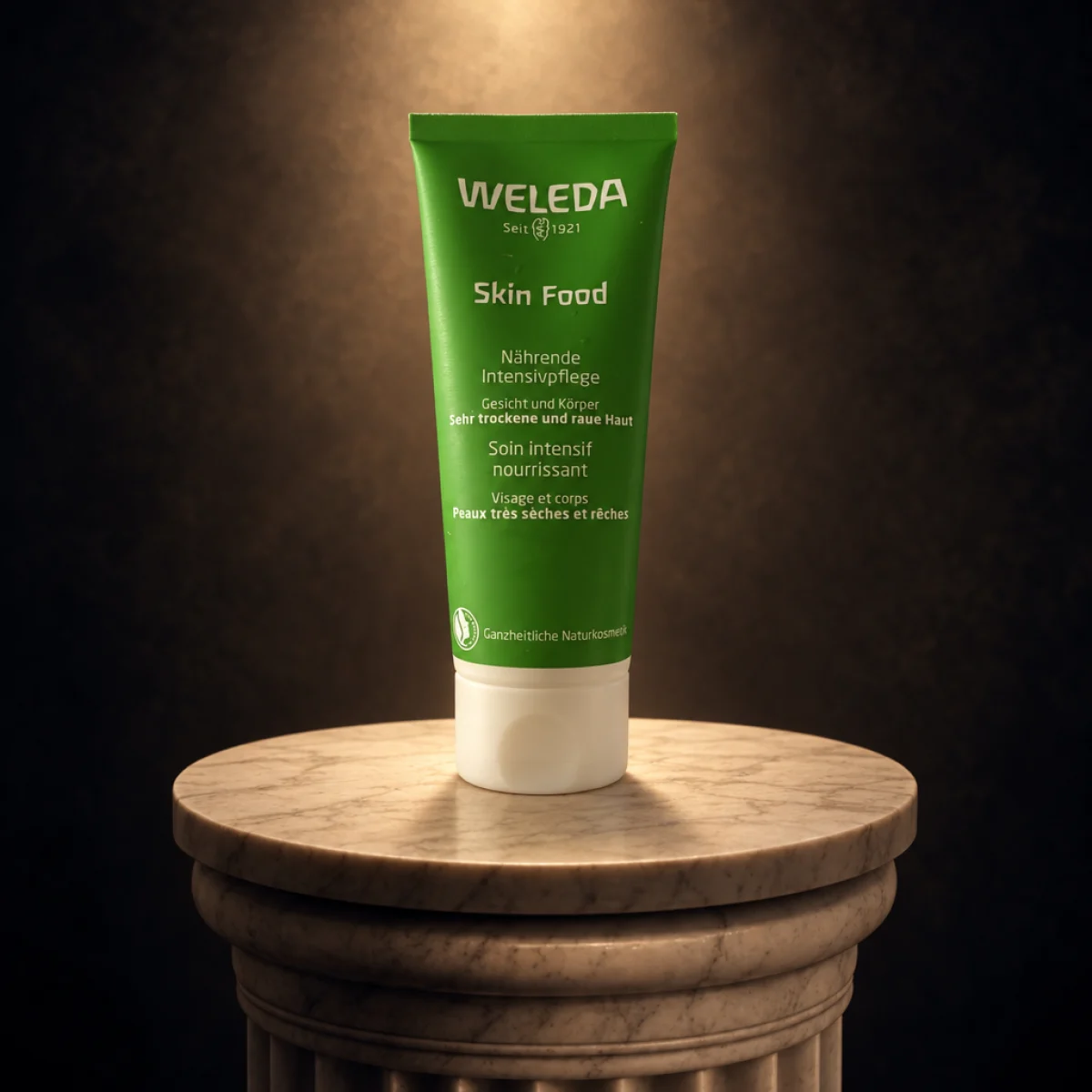
Weleda – Skin Food – Soin nourrissant – Texture légère 30 ml

Since 1921, Weleda has built its expertise around plants, from their cultivation to their place in formulas. The story of Skin Food sheds light on this approach, right through to its light-textured version.

A house with European roots

Weleda was born in 1921, in Arlesheim, in Switzerland, and in Schwäbisch-Gmünd, in Germany. At its origin, three profiles meet: the doctor Ita Wegman, the philosopher Rudolf Steiner and the chemist Oskar Schmiedel. The history of the house is linked to anthroposophy, which forms part of its heritage.

Its establishment in Alsace as early as 1924 adds a French foothold to these European roots. To understand the brand, one particularly useful thread is the place given to plant-based raw materials, which can be found in its face care as well as its body care.

Plants as expertise

At Weleda, working with plants begins notably in its their own gardens, cultivated according to the methods ofbiodynamic agriculture. It continues with the preparation of plant extracts intended for the formulas. Growing a plant, preparing an extract from it and combining it with a cosmetic base are distinct steps: it is the way they are linked that gives meaning here to the notion of know-how.

The brand claims certified natural cosmetics NATRUE. This commitment accompanies a formulation approach in which oils and extracts play a central role. However, it does not mean that all ingredients are plant-based: beeswax and lanolin are therefore included in the Skin Food light texture care.

One range, several uses

The Weleda range links face and body care, massage gestures and care for the little ones. TheArnica Massage Oil and calendula baby care illustrate this diversity. The choice of a care product is therefore made first according to its purpose and use, rather than solely on the basis of the name of the highlighted plant.

Skin Food holds a historic place in this range: the original cream dates back to 1926. This date belongs to the classic care product, while the light version is a variant of it. Distinguishing the two makes it possible to understand the continuity of the range without confusing the textures.

Skin Food in light texture

Weleda – Skin Food – Nourishing care – Light texture 30 ml translates this heritage into a care product designed for thehydration of dry areas of the face and body. Its distinction lies in a light, fast-absorbing texture. Sunflower oil, glycerine and cocoa and shea butters sit alongside extracts of wild pansy, rosemary, chamomile and calendula.

For application on the face, the recommended gesture is to take a small amount, then massage the dry areas to help the care product absorb. The formula also contains fragrance, with limonene, linalool, geraniol and citral declared. These composition markers usefully complement the choice of a texture: a formula that gives a large place to plants is not necessarily fragrance-free.

In brief

  • Weleda was founded in 1921 in Switzerland and Germany, then established itself in Alsace in 1924.
  • The cultivation of plants and the preparation of extracts structure its know-how.
  • The brand claims certified natural cosmetics NATRUE.
  • Classic Skin Food dates from 1926; the light texture is a distinct variant.
  • The 30 ml light care product is intended for dry areas of the face and body and contains fragrance.

Weleda – Skin Food – Soin nourrissant – Texture légère 30 ml

Weleda – Skin Food – Nourishing care – Light texture 30 ml

Skin Food is a nourishing 30 ml tube care product, formulated with sunflower oil, glycerine and cocoa and shea butters.

9,90 €

See the product
Posted on — Leave a comment

Bjorg: from Lyon roots to everyday organic

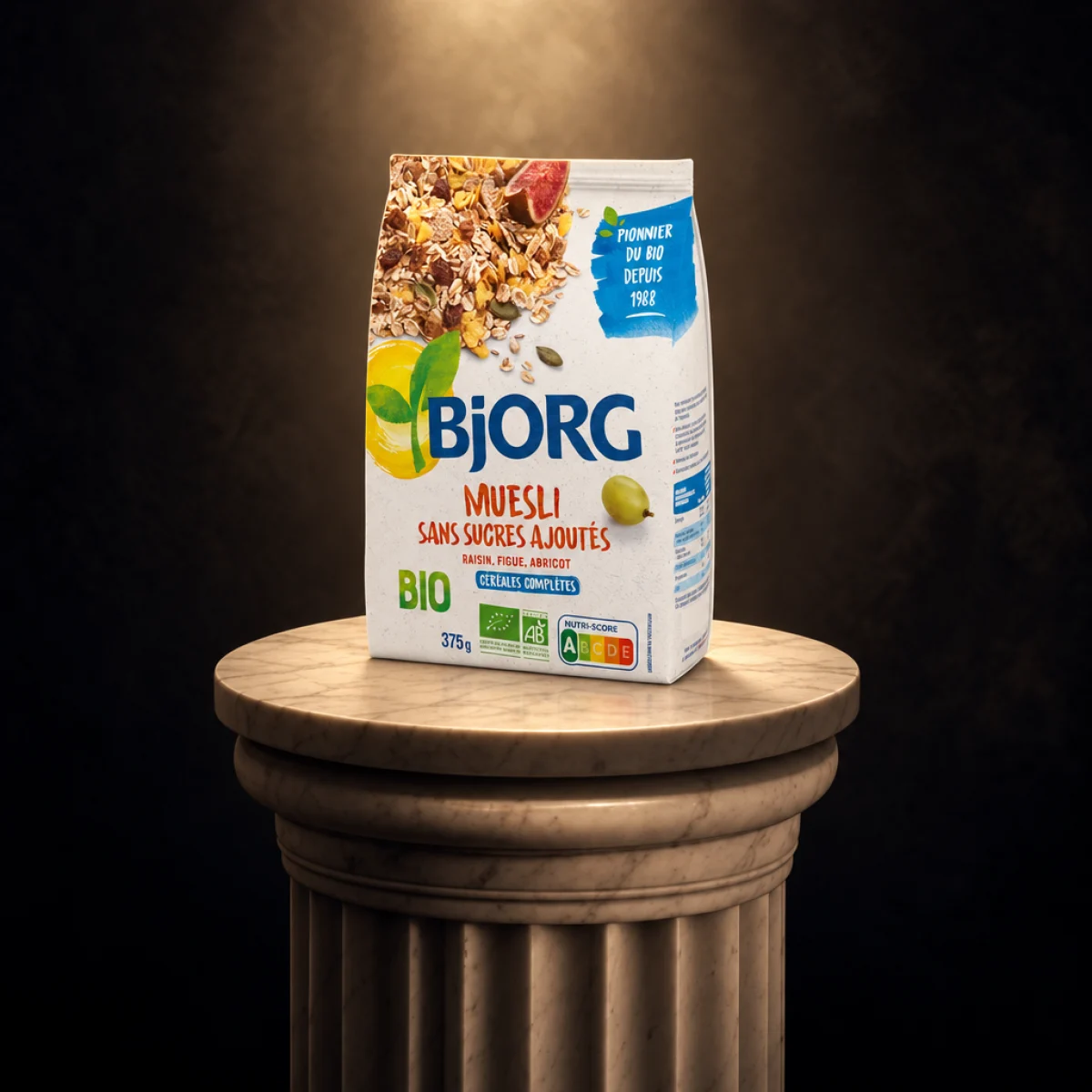
Bjorg – Muesli sans sucres ajoutés – Raisin, figue, abricot – 375 g

Born near Lyon in 1988, Bjorg made organic produce the guiding thread of its range. From plant-based drinks to mueslis, its journey sheds light on a range designed for breakfast and everyday cooking.

A project born near Lyon

The story of Bjorg begins in 1988, in Saint-Genis-Laval, near Lyon. Behind this French brand, a nutritionist has a practical project: to give organic food a place in French supermarkets, where everyday shopping is done.

This ambition explains the diversity of its range, which runs from breakfast cereals to cooking ingredients. To understand the brand, it is necessary to distinguish its French roots from the place of manufacture of each product: the muesli presented here is made in Germany.

Organic as a guiding principle

Bjorg makesorganic farming the foundation of its range. On its muesli, this commitment is reflected in ingredients that are all organic and in the presence of the AB and European organic logos on the packaging. These markers relate to the agricultural production method; they do not indicate the country of manufacture.

The brand has also removedpalm oil from all its products since 2019. This formulation choice and the use of organic produce are two separate commitments, useful to know when reading its range beyond the recipe names alone.

A range open to plant-based products

As 1992, Bjorg is developing its range of plant-based drinks with a soy drink. Almond, oats, rice and coconut then broaden this world. These different bases make it possible to vary flavours and combinations, particularly with cereals at breakfast.

The breakfast range includes mueslis, oat flakes and porridges. The place given to whole cereals and flours is another common thread in its recipes. When choosing, the format also matters: a mix of cereals, fruit and seeds is not prepared in the same way as porridge, which is generally sought for a more bound texture.

Muesli, a concrete example

The product Bjorg – Muesli without added sugars – Raisins, figs, apricots – 375 g illustrates this work of pairing. Its recipe combines whole oats, wheat and spelt, maize, raisins, figs, dates and apricots, to which sunflower, linseed and pumpkin seeds are added. The no added sugars statement describes the formulation: it does not mean the absence of sugars, since the ingredients naturally contain them. The mix contains gluten cereals.

With yoghurt or a plant-based drink, it can be enjoyed straight away to keep more bite, or after a short while to let the flakes soak through. Bjorg also suggests incorporating it into a crumble, a way of using it outside breakfast. After opening, the packet should be sealed properly and stored away from moisture.

In brief

  • French brand created in 1988 in Saint-Genis-Laval by a nutritionist.
  • Organic has been the foundation of the range; palm oil has been absent from it since 2019.
  • A plant-based drinks offer developed from 1992, alongside morning cereals.
  • The muesli presented is made in Germany with organic ingredients.
  • No added sugars does not mean no naturally present sugars.
Bjorg – Muesli sans sucres ajoutés – Raisin, figue, abricot – 375 g

Bjorg – Added-sugar-free muesli – Raisins, fig, apricot – 375 g

This organic muesli with no added sugars comes in a 375 g packet. Its recipe includes sunflower, linseed and pumpkin seeds in particular.

3,79 €

See the product
Posted on — Leave a comment

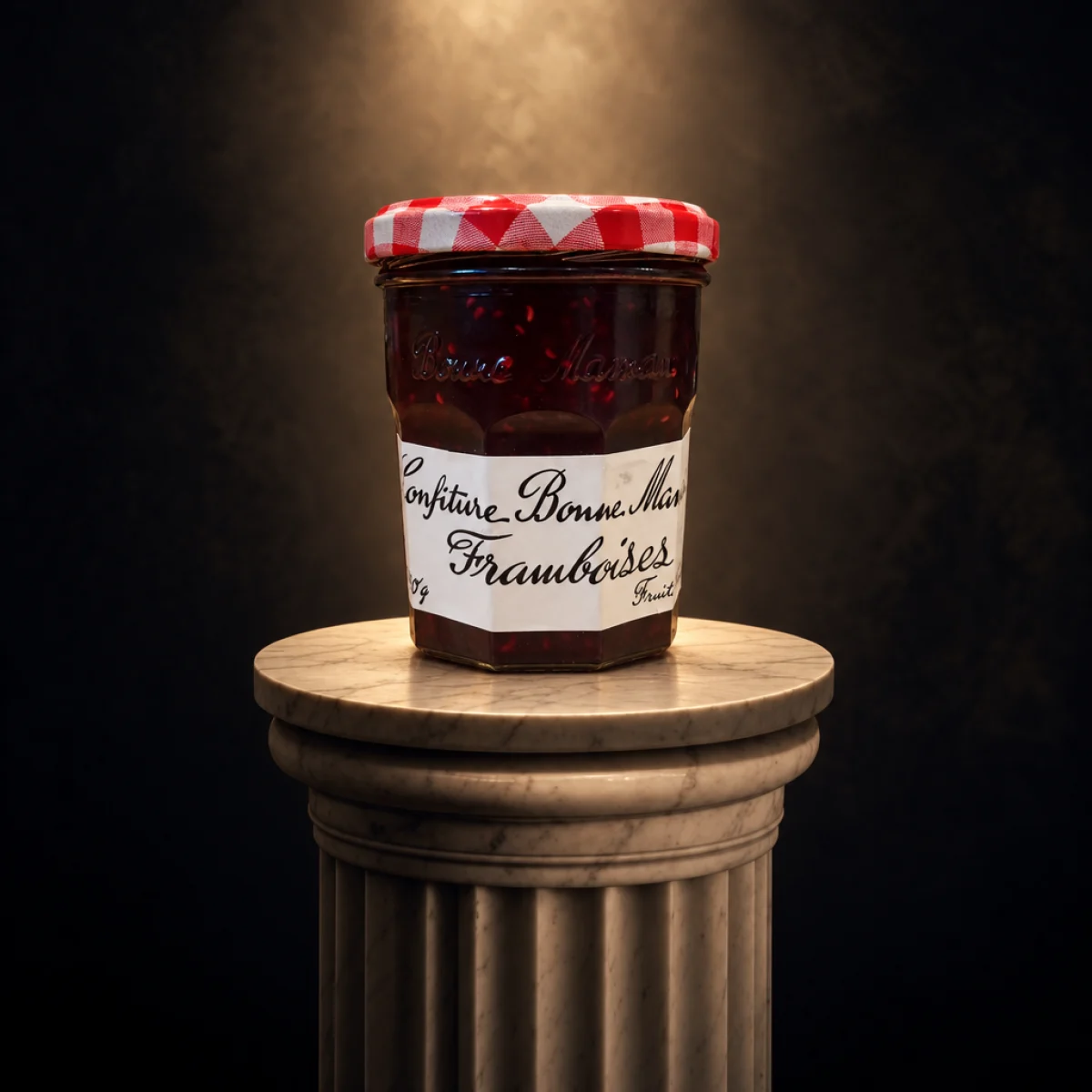
Bonne Maman raspberry jam: from the jar to the toast

Bonne Maman – Confiture extra de framboises – 370 g

With its recipe made from 50 g of fruit per 100 g, this jam gives a clear place to raspberry. Composition, ideas in the kitchen and storage: here is how to enjoy this classic.

A classic with roots in the Lot

Bonne Maman was born in 1971, on the initiative of Jean Gervoson, in Biars-sur-Cère, in the Lot. Its handwritten label and red-and-white gingham lid echo the codes of family jars: a presentation that goes with its home-style inspiration.

The product Bonne Maman – Extra raspberry jam – 370 g is part of this range of classic recipes. Made in France, this spreadable jam is aimed at raspberry lovers, at breakfast as well as for everyday desserts.

What the recipe contains

The preparation uses 50 g of fruit per 100 g of finished product. This marker describes the quantity of raspberries used to make the jam. The ingredients list combines these fruits with sugar, of cane brown sugar, concentrated lemon juice and fruit pectins.

The fruit pectins serve as a gelling agent: they help the jam set, giving a spreadable consistency rather than a pourable coulis. This 370 g jar corresponds to the extra classic recipe, distinct from the 310 g Seedless variant.

From toast to Swiss roll

Its first use remains the toast. On toast, let the surface cool slightly before spreading on the jam: you will keep a filling that is easier to spread. Start with a thin layer, then adjust the amount according to how much room you want to give the fruit and sugar.

To vary it, add a spoonful to plain plain fromage blanc, then stir lightly to keep the marbling. In a Swiss roll, spread an even layer over the cooled sponge, leaving a small free edge: the filling will overflow less when rolling.

Good storage habits

Before opening, the jar keeps at room temperature. Once opened, store it in the refrigerator and consume the jam within three weeks. Writing the opening date on the lid helps you keep track of this marker without having to remember it.

For serving, use a clean spoon and avoid putting a knife coated with butter or crumbs back into the jar. Close the lid after each use and put the jar back in the fridge after the meal.

In brief

  • An extra jam made in France, in a 370 g jar.
  • A recipe prepared with 50 g of fruit per 100 g of finished product.
  • Fruit pectins used as a gelling agent.
  • For spreading on toast, mixing into fromage blanc or spreading in a Swiss roll.
  • After opening: three weeks in the fridge.
Bonne Maman – Confiture extra de framboises – 370 g

Bonne Maman – Extra raspberry jam – 370 g

This extra raspberry jam, made in France, comes in a 370 g jar. Its recipe is prepared with 50 g of fruit per 100 g of finished product.

3,49 €

See the product